
Infrastructure Depth Without Damage Risk
Utility Trenching in Shawboro for electrical, water, and infrastructure installation across residential and commercial properties
Utility trenching establishes underground pathways for electrical lines, water service, septic systems, and communication cables, and precision equipment manages depth, width, and slope consistency to match utility specifications. Southern Roots Land Development, Inc. executes utility trenching across Shawboro, Gates County, and Currituck with specialized trenching equipment that avoids damage to existing infrastructure while maintaining compliance with installation standards. When your property requires new utility connections, irrigation systems, or infrastructure for outbuildings, trenching prepares the route before conduit or pipe installation begins.
Trenching involves cutting a narrow excavation to the required depth and width, placing bedding material to protect utilities, and backfilling once conduit or pipe is installed and inspected. In rural northeastern North Carolina, trenching must account for water table levels and seasonal saturation to prevent trench collapse and ensure long-term stability around buried utilities. Equipment-based trenching maintains consistent depth and slope without hand-digging or improvised methods that risk uneven bedding and future settling.
Arrange a site assessment to identify utility routes, depth requirements, and any existing infrastructure that affects trenching paths.
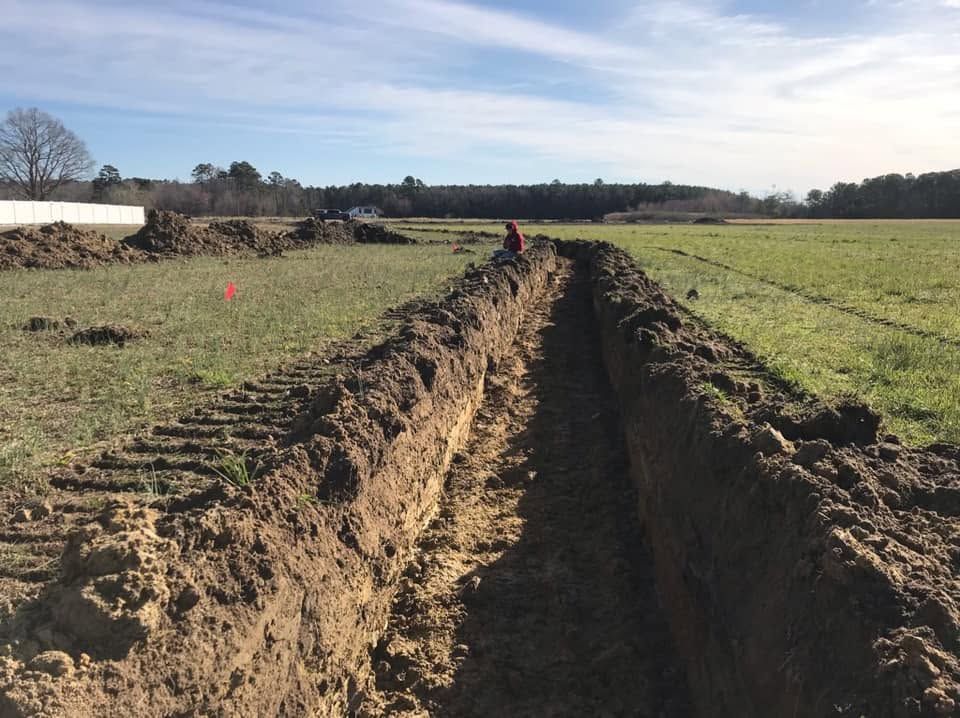
How Precision Trenching Protects Buried Utilities
Utility performance depends on correct installation depth and bedding material, both of which require precise trench dimensions. Electrical conduit must remain below frost depth to avoid freeze-thaw movement, water lines require consistent slope to prevent air pockets, and septic drain fields depend on level trenches for even distribution. Trenching equipment controls depth and width across the entire route, which ensures bedding material surrounds the utility evenly and backfill compacts without creating voids that cause settling.
Once trenching and backfilling are complete, you'll see a filled trench that matches surrounding grade without depressions or mounds, utility access points marked for future reference, and a site ready for final grading or landscaping. Properly bedded utilities resist shifting during soil settlement, and compacted backfill prevents surface depressions that collect water or create trip hazards.
Trenching projects often require coordination with utility providers, inspection scheduling, and sequencing with other site work to avoid conflicts. Properties in Gates County and Currituck frequently involve trenching for well connections, septic systems, and electrical service from pole-mounted transformers, which requires routing trenches to avoid wetlands, easements, and existing underground infrastructure.
Answers to Frequent Trenching Questions
Property owners installing utilities or infrastructure ask about trench depth, bedding requirements, and how trenching integrates with other construction phases.
What depth is required for utility trenching?
Depth depends on utility type and local codes—electrical conduit typically requires 18 to 24 inches of cover, water lines must be below frost depth, and septic drain fields are installed at depths specified by soil and site conditions. Trenching equipment in Shawboro maintains consistent depth across the entire route to ensure utilities meet installation standards.
How is bedding material used in utility trenches?
Bedding material, usually sand or fine gravel, is placed at the bottom of the trench to provide a stable base for conduit or pipe and protect utilities from sharp rocks or soil movement. After the utility is installed, additional bedding surrounds the pipe before backfill is placed and compacted.
When does trenching happen relative to other site work?
Trenching typically occurs after clearing and rough grading but before final grading and landscaping. Coordinating trenching with utility provider schedules and inspection requirements ensures the trench remains open only as long as necessary, reducing the risk of collapse or water accumulation in rural areas with high water tables.
What happens if trenching encounters rock or existing utilities?
Rock requires specialized equipment or methods to break and remove without damaging the trenching machine, which may extend project timelines. Existing utilities are located through utility marking services before trenching begins, and routes are adjusted to maintain required separation distances and avoid damage risk.
How is backfill compacted after utility installation?
Backfill is placed in layers and compacted with equipment to match surrounding soil density and prevent surface settling. Proper compaction ensures the trench area supports vehicle traffic and landscaping without forming depressions that collect water or expose the buried utility.
Southern Roots Land Development, Inc. manages utility trenching with precision equipment and coordinates installation with your project timeline to avoid delays caused by weather or inspection scheduling. Request a consultation to review utility routes and trenching requirements for your property.