
Water Features That Function Through Wet Seasons
Pond Construction in Shawboro for retention basins, stormwater management, and residential water features requiring proper drainage design
Retention ponds and stormwater basins across northeastern North Carolina fill rapidly during the region's frequent rain events, making basin design and compacted clay bottoms critical to controlling overflow and preventing erosion around pond edges. Southern Roots Land Development, Inc. digs and grades retention ponds, stormwater basins, and residential water features in Shawboro and surrounding areas, where coastal stormwater regulations require engineered overflow systems and specific slope angles to manage runoff volume. Property owners installing new basins or replacing failed retention systems need excavation contractors who understand how water moves through sandy loam soils and how compaction prevents seepage that drains ponds during dry periods.
The construction process excavates the basin footprint to designed depth and volume, grades interior slopes to specified angles that prevent erosion and support vegetation, and compacts clay material across the bottom surface to create a water-retaining seal. Drainage and overflow features integrate with the basin design, routing excess stormwater away from structures and preventing uncontrolled discharge during heavy rain.
Request a site consultation to evaluate soil conditions and drainage requirements for your planned pond or retention basin.
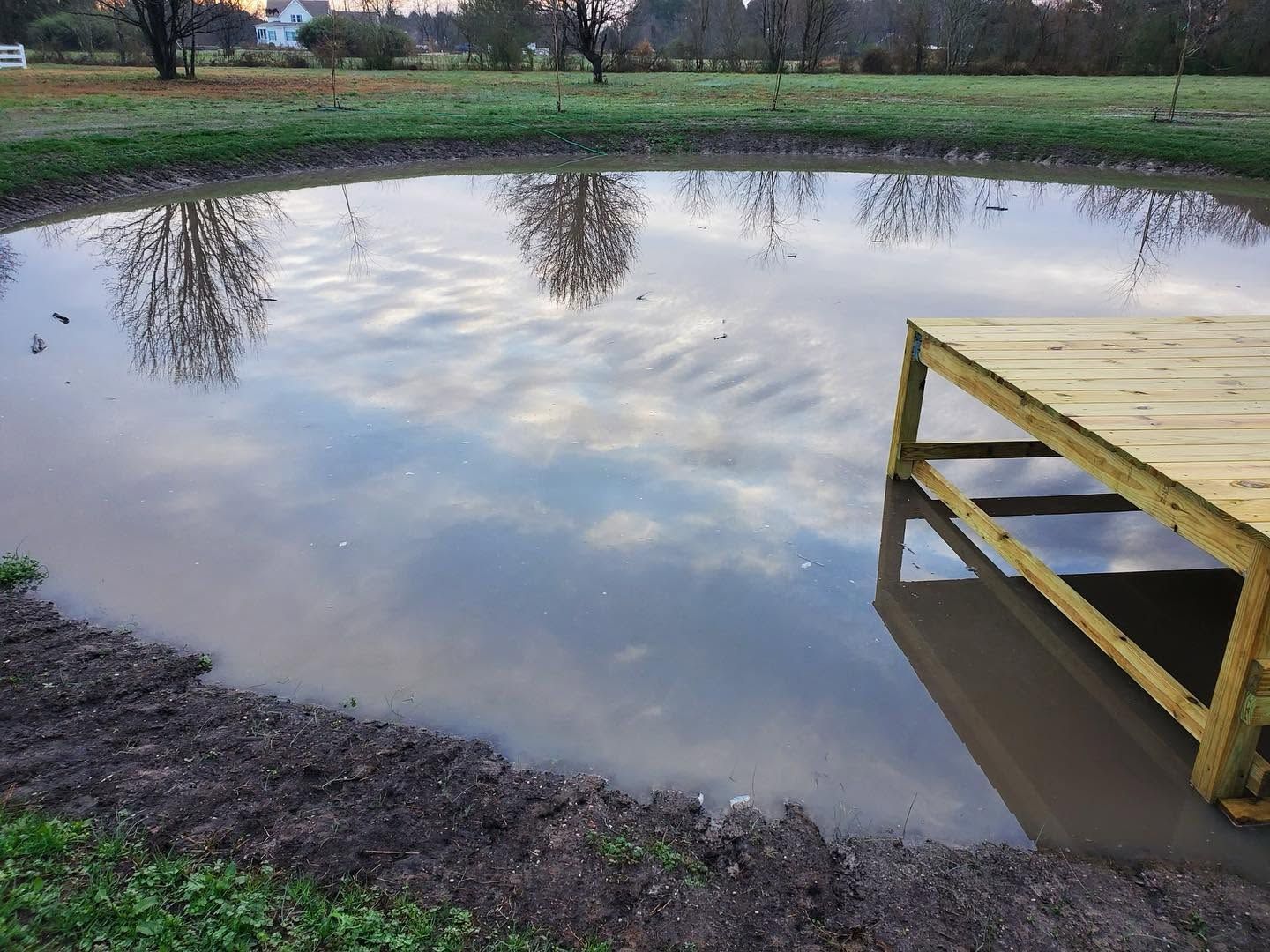
How Basin Construction Addresses Stormwater Volume
Excavation begins with clearing the pond footprint and removing topsoil to reach stable subgrade, using hydraulic excavators to reach design depth while maintaining slope angles that prevent collapse. Interior slopes are graded to ratios that support vegetation growth and allow maintenance equipment access, typically ranging from three-to-one to four-to-one depending on soil type and basin purpose.
After excavation and grading finish, you notice water collecting in the basin during rain events and holding at designed levels rather than draining into surrounding soil, overflow structures directing excess flow through controlled channels instead of eroding pond edges, and slopes remaining stable without slumping into the basin floor. The compacted clay bottom prevents seepage that would otherwise drain residential ponds during summer months when evaporation already lowers water levels.
Construction includes integrating inlet pipes that route stormwater into the basin from drainage swales or downspout systems, and outlet structures that control discharge rates to meet local stormwater management requirements. Basins designed for retention hold water permanently, while detention basins include controlled release systems that slowly drain accumulated stormwater over hours or days following rain events.
Common Questions About This Service
Property owners and developers planning pond construction across northeastern North Carolina often ask about excavation depth, soil conditions, and regulatory requirements that affect basin design.
What soil conditions affect pond construction in Shawboro?
Sandy loam soils common across Currituck and Gates County drain quickly and require thicker clay liners or compacted clay import to prevent seepage, while areas with naturally occurring clay subsoil support water retention with less imported material once topsoil and organic layers are removed during excavation.
How deep are residential ponds typically excavated?
Depth varies based on purpose and available space, with most residential water features ranging from four to eight feet at the center to support aquatic life and maintain water volume during dry periods, while stormwater retention basins may be shallower with larger surface areas to capture runoff volume.
What happens to excavated material during pond construction?
Excavated soil is typically used to build berms around the pond perimeter, grade surrounding areas for drainage flow toward the basin, or hauled off-site if soil quality is poor or if the volume exceeds on-site grading needs.
When should overflow systems be installed during construction?
Overflow structures and drainage pipes are installed after rough excavation but before final grading and compaction, allowing precise elevation control that prevents the basin from overtopping during storm events while maintaining designed water levels during normal conditions.
How long does pond construction take from excavation to completion?
Timeline depends on basin size and soil conditions, with smaller residential ponds often completed within one to two weeks and larger stormwater basins requiring two to four weeks for excavation, grading, compaction, and installation of inlet and outlet infrastructure.
Southern Roots Land Development, Inc. handles pond excavation and grading using hydraulic excavators and dozers suited to precision shaping and compaction work required for water-retaining basins. Schedule an on-site assessment to review soil conditions, drainage flow, and design requirements for your pond construction project.