
Access Routes Before Equipment Arrives
Land Clearing in Shawboro for wooded parcels requiring forestry mulching and full-site debris management
Northeastern North Carolina's ongoing development and mild winters extend the land clearing season year-round, and Southern Roots Land Development, Inc. operates dedicated forestry mulching equipment to clear residential and commercial parcels across Shawboro, Currituck, and Gates County. When your property contains standing timber, dense undergrowth, or scattered vegetation that prevents site access, clearing prepares the land for construction, infrastructure installation, or sale. Forestry mulching grinds vegetation on-site rather than requiring haul-away, which reduces project timelines and leaves a layer of organic material that stabilizes soil.
Clearing involves removing trees, brush, and surface vegetation while managing debris so equipment can access the site for subsequent grading or excavation work. The forestry mulcher processes material in place, eliminating the need for burning, hauling, or stacking debris piles. This approach is faster than traditional clearing methods because material removal and site cleanup happen simultaneously during a single equipment pass.
Schedule a property walkthrough to evaluate vegetation density and determine equipment access for your parcel.
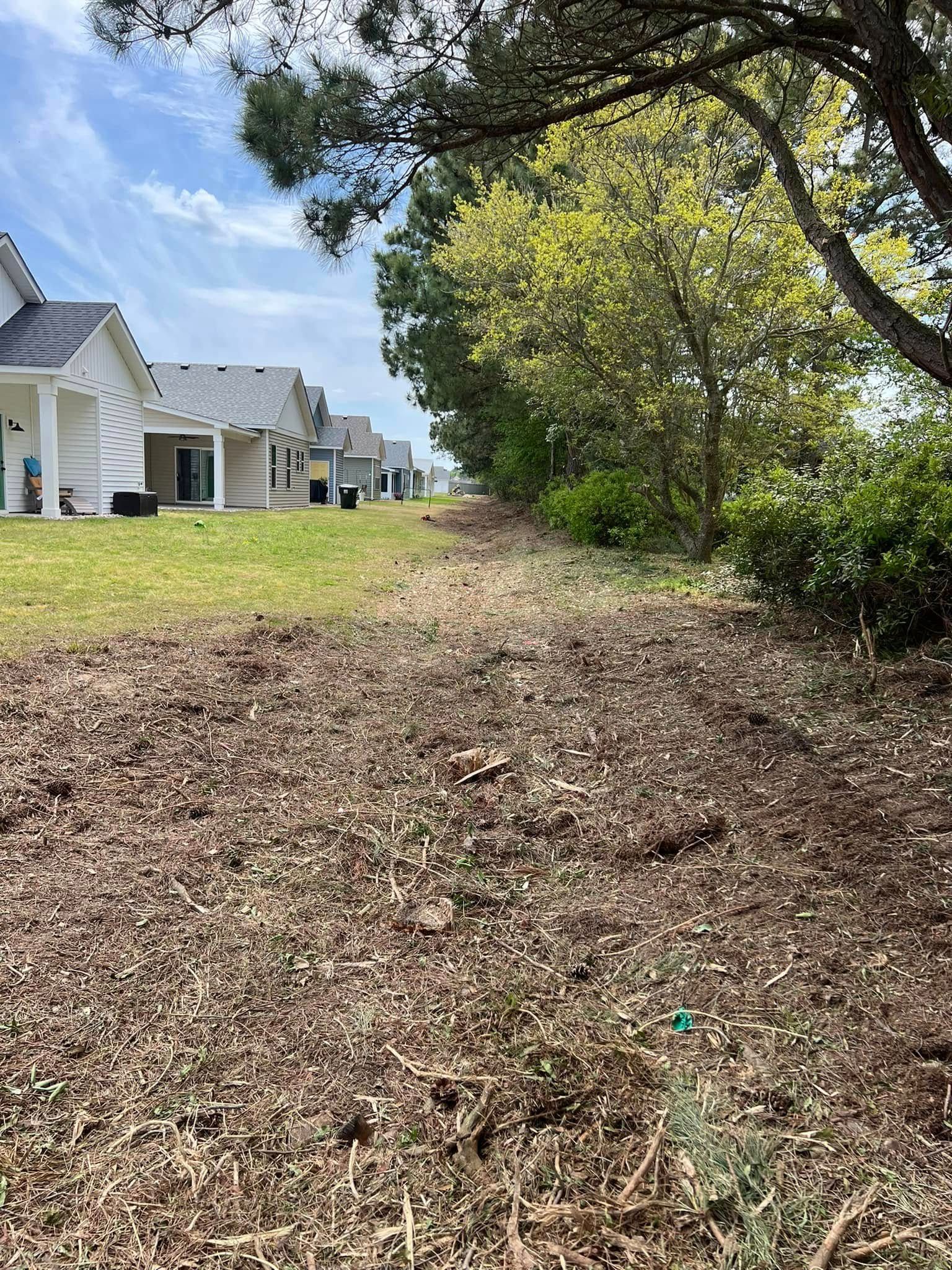
How Forestry Mulching Changes Site Conditions
Land clearing with forestry mulching produces a site covered in shredded organic material rather than bare soil, which reduces erosion during rain events and provides a stable surface for equipment traffic. Southern Roots Land Development, Inc. uses a dedicated forestry mulcher—not improvised attachments or hand tools—which ensures consistent processing of both hardwood and softwood vegetation without leaving stumps or root systems that interfere with grading.
Once clearing is complete, you'll see an open parcel with ground-level access for trucks and machinery, no debris piles requiring disposal, and a layer of mulch that prevents mud formation during wet weather. The site is ready for grading, excavation, or utility installation without additional cleanup steps. Properties in wooded areas of Currituck County often require selective clearing to preserve boundary trees or maintain buffers, which forestry mulching accommodates by processing only designated vegetation.
Full equipment fleet operation means a single operator can clear the site efficiently without coordinating multiple subcontractors or scheduling separate debris removal. Clearing scope depends on parcel size, vegetation density, and whether the project requires stump grinding or root removal for foundation work.
Questions Property Owners Ask About Clearing
Landowners preparing parcels for development or sale typically want to know about equipment methods, debris disposal, and how clearing affects project timelines.
What's the difference between forestry mulching and traditional clearing?
Traditional clearing involves cutting trees, hauling debris off-site, and grinding stumps separately, which requires multiple equipment types and extends timelines. Forestry mulching grinds vegetation in place during a single pass, leaving shredded material on the ground as erosion protection and eliminating haul-away costs.
How long does land clearing take for a residential lot?
Clearing duration depends on vegetation density and parcel size, but forestry mulching typically clears a half-acre residential lot in one to two days. Heavily wooded properties or parcels with large hardwoods may require additional time for stump processing and root management.
What happens to the mulched material left on-site?
Shredded vegetation remains on the ground as a protective layer that stabilizes soil and prevents erosion during rain events. Over time, the organic material decomposes and integrates into the topsoil. If grading or excavation follows immediately, the mulch layer is incorporated into earthwork or relocated as needed.
Can selective clearing preserve specific trees or boundaries?
Forestry mulching allows selective clearing by processing only designated vegetation while leaving boundary trees, specimen hardwoods, or buffer zones intact. Operators mark preservation areas before equipment mobilization to ensure clearing stops at defined boundaries.
When should clearing happen relative to other site work?
Clearing occurs first to establish equipment access for grading, excavation, and utility installation. In Shawboro and the Virginia extension service area, mild winters allow clearing to proceed year-round, though scheduling during dry months reduces the risk of soil compaction from equipment traffic on saturated ground.
Southern Roots Land Development, Inc. operates forestry mulching equipment across northeastern North Carolina and coordinates clearing with your project schedule to prepare sites for the next construction phase. Request a site evaluation to assess vegetation type and determine clearing timelines for your property.