
Drainage Infrastructure That Prevents Washouts
Culvert Installation in Shawboro for Driveways, Roadways, and Commercial Sites Where Proper Water Flow Is Critical
Frequent rain in coastal North Carolina requires drainage infrastructure that routes water under driveways and roads without erosion or flooding. Southern Roots Land Development, Inc. installs drainage culverts for residential driveways, commercial sites, and roadways across Shawboro, Currituck, and Gates County, handling trench excavation, pipe positioning, backfill compaction, and slope verification to ensure proper water flow. The company integrates culvert work with road construction and site grading, so drainage systems function as part of the overall site development rather than as isolated additions.
Culvert installation involves digging trenches to the required depth and slope, positioning pipe to align with natural drainage pathways, and compacting backfill to prevent settling that would collapse the culvert or create low spots in the roadway above. Coastal water management demands precise slope calculation, as even minor installation errors cause pooling or washouts during storm events.
Arrange a site assessment to identify drainage pathways and culvert sizing for your property.
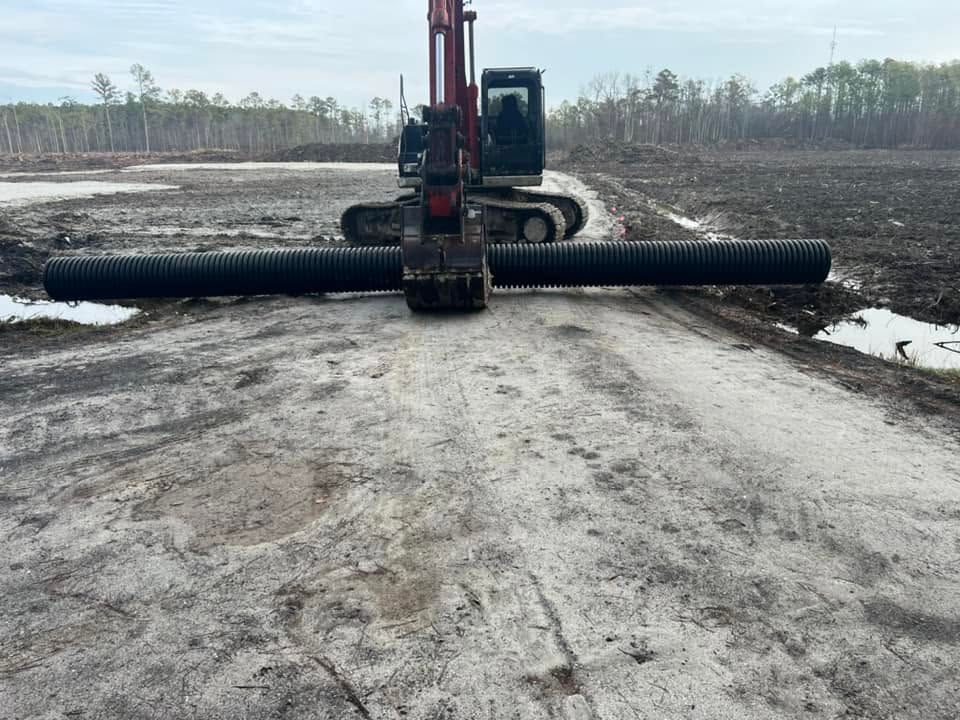
How Culverts Address Water Management Requirements
Southern Roots positions culvert pipe to match the slope and direction of existing drainage channels, ensuring water flows through the culvert rather than pooling at the entrance or eroding the surrounding soil. Trenching equipment excavates to the engineered depth, and compaction occurs in stages as backfill is added, preventing voids that would cause the road surface to sink or crack over time. Utility trenching expertise translates directly to culvert installation, as both require precise depth control and compaction standards to maintain site integrity.
Once installation is complete, you see driveways and roads that remain intact during heavy rain, water flowing freely through culverts without debris blockage or erosion at the outlet, and roadway surfaces that maintain their grade without settling over the culvert location. Storm runoff moves through the drainage system rather than washing out road edges or creating impassable puddles across travel lanes.
Culvert sizing depends on the volume of water the drainage channel carries during peak rainfall, so proper installation requires evaluating upstream drainage area and rainfall patterns specific to northeastern North Carolina. Undersized culverts create bottlenecks that cause flooding, while improperly sloped installations allow sediment to accumulate inside the pipe and block flow over time.
What Clients Often Want to Know
Culvert installation in Shawboro addresses drainage challenges common to coastal regions with heavy rainfall, so these questions focus on the factors that affect performance.
What determines the correct culvert size for a driveway or roadway?
The upstream drainage area, rainfall intensity in northeastern North Carolina, and the slope of the natural channel determine pipe diameter, so undersized culverts create flooding while oversized installations add unnecessary cost without improving function.
How does proper slope ensure water flows through the culvert?
Trenching establishes a consistent downhill grade from inlet to outlet, so gravity moves water through the pipe without pooling at the entrance or requiring pumps, which makes slope accuracy critical during installation.
What happens if backfill is not compacted properly over a culvert?
Voids in the backfill cause the road surface to settle and crack over the culvert location, creating low spots that collect water and accelerate pavement failure, so compaction must occur in lifts as soil is added.
When does frequent rain in Shawboro require culvert installation during site development?
Any driveway or road crossing a drainage channel requires a culvert to prevent washouts, especially in coastal North Carolina where storm season produces heavy runoff that erodes unprotected road edges and undermines pavement.
What's the difference between culvert installation and utility trenching?
Both require precise depth and compaction, but culverts must maintain exact slope for water flow and withstand surface loads from vehicle traffic, while utility trenches focus on protecting buried lines from damage and frost heave.
Southern Roots Land Development, Inc. integrates culvert installation with road grading and site drainage planning across Currituck and Gates County. Schedule a consultation to evaluate your property's water management needs and drainage pathways.