
Excavation That Handles Water Table Challenges
Pool Excavation in Shawboro for Residential Projects Requiring Precision Grading and Drainage Planning
High water tables and seasonal saturation complicate pool excavation in northeastern North Carolina, where improper site assessment leads to floating pool shells and chronic drainage problems. Southern Roots Land Development, Inc. excavates residential pool sites across Shawboro with precision grading, drainage planning, and equipment management designed to address these conditions. The company's equipment fleet handles site grading before excavation and debris removal after the pool basin is complete, ensuring proper slope and compaction throughout the process.
Pool excavation requires establishing the basin with exact depth and slope specifications while routing groundwater away from the excavation area. Drizzling rain affects project timing in this region, so site access and soil moisture must be managed carefully to maintain compaction standards and prevent collapse during excavation.
Arrange an on-site consultation to assess your property's water table and drainage requirements.
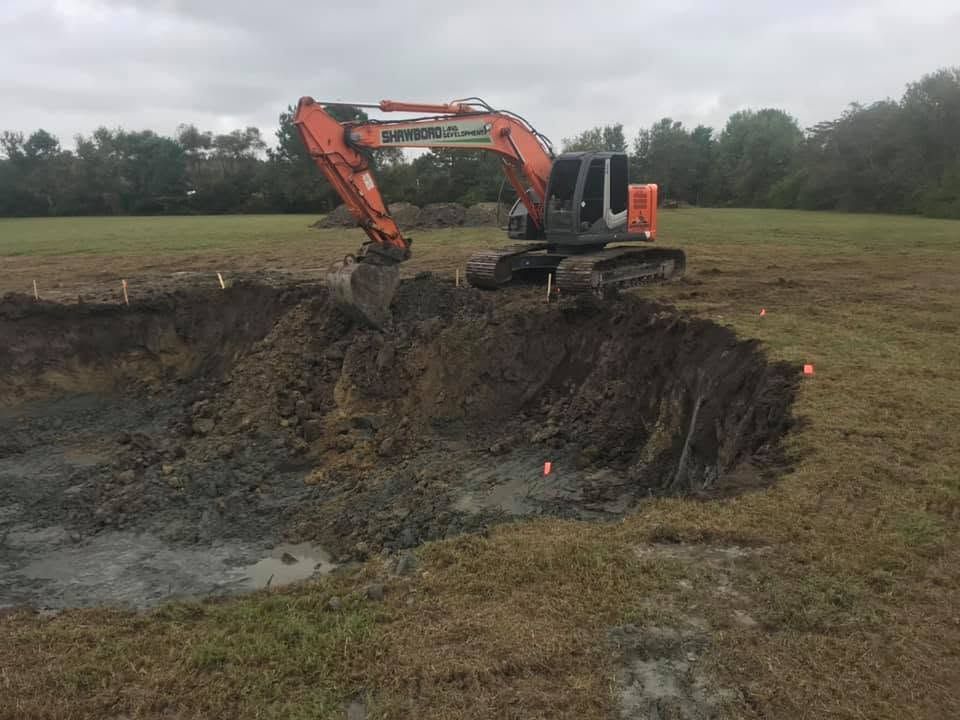
How Pool Excavation Addresses Site-Specific Conditions
The excavation process begins with site assessment to identify water table depth and soil composition, which determines whether dewatering systems or drainage trenches are needed before digging begins. Equipment creates the pool basin to engineered dimensions, removing soil in stages to maintain stable walls and prevent cave-ins, then compacts the floor and walls to support the pool shell without settling.
After excavation finishes, you see a stable basin with uniform walls, proper drainage pathways routed away from the pool perimeter, and compacted surfaces ready for plumbing installation and shell placement. Water no longer accumulates in the excavation during rain, and the surrounding grade directs surface runoff away from the pool area rather than toward it.
Multiple equipment deployment allows Southern Roots to handle site access challenges common to residential properties, where tight spaces and existing landscaping require careful maneuvering. The debris removal phase clears excavated soil from the site, leaving clean working conditions for pool contractors who follow.
Answers to Frequent Service Questions
Residential pool excavation in Shawboro depends on site-specific water table conditions and soil types, so these questions cover the factors that affect your project.
What does expert site assessment involve before pool excavation starts?
Southern Roots evaluates water table depth, soil saturation levels, and existing drainage patterns to determine whether dewatering systems or temporary drainage trenches are required to keep the excavation stable during digging.
How does the water table in northeastern North Carolina affect pool excavation?
Seasonal saturation can cause excavated basins to fill with groundwater, requiring dewatering pumps and drainage planning to prevent the pool shell from floating after installation, which makes proper assessment critical before excavation begins.
What equipment is used for precision grading during pool excavation?
Excavators create the basin to exact depth specifications, and grading equipment establishes the surrounding slope to direct water away from the pool perimeter, ensuring proper drainage after the pool is complete.
When does drizzling rain delay pool excavation projects?
Rain saturates soil and prevents proper compaction of the basin floor and walls, so excavation timing must account for weather patterns in Shawboro to avoid collapsing walls and unstable conditions during digging.
What happens to excavated soil after the pool basin is complete?
Debris removal clears soil from the site entirely, or excess material is graded into surrounding landscaping if the property layout allows, leaving clean access for plumbing and pool shell installation.
Southern Roots Land Development, Inc. manages the equipment and drainage planning that residential pool projects require in high water table conditions. Schedule a property evaluation to identify specific site challenges before excavation begins.